SOIL SOUP.
I was a cook for many years before I became a farmer and if there is one thing I can say about farming, it's that farming––complete with recipes, long, grueling days and urgency––is just cooking with a straw hat in place of a toque. And in both careers, it all starts with ingredients."Your dish is only as good as your ingredients," is a clever and much used adage in the food world. It means you could be the best cook in the world, but if your tomatoes aren't any good then you're not going to make the best tomato soup in the world. Sorry. For farming it's the same thing: your vegetables can only be as good as your soil and your baby plants can only be as good as your soil mix. So when the time came this week to find a few things for our soil mix (homemade potting soil, basically), Hannah and I set out to utilize the best ingredients available and we're excited about no ingredient quite as much as the sand.Sand is an essential part of potting mix. Along with compost, peat moss, soil and a few other amendments, farmers add sand to help aerate. "Adequate aeration," famed farmer Eliot Coleman tells us in The New Organic Grower, "is the key to successful plant growth in any medium." But I have always believed sand does more than just aerate. Sand is mysterious and multitudinous, comprised of millions of tiny pebbles from all different brands of rock and mineral formed over tens of thousands of years then soaked in fertile silt. I've always believed plants like sand for more than just aeration, they use the minerals and the silt and the diversity provided by sand. In honor of that, we wanted to use the best, most alive sand we could find. Out of the creek at the bottom of the hill by our garden, Hannah and I set to work shoveling and sifting this wonderful ingredient...- Jesse.


BEE READY.
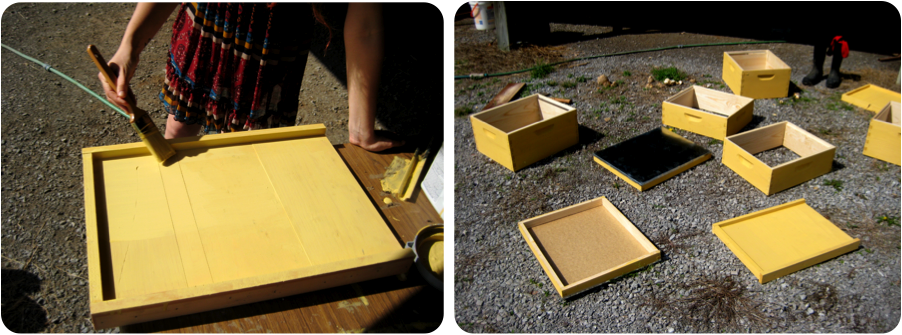
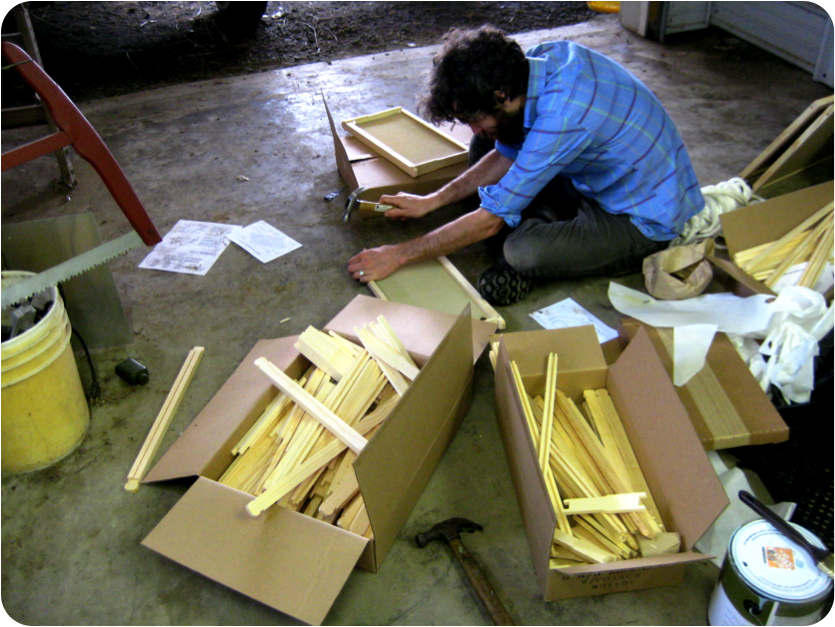
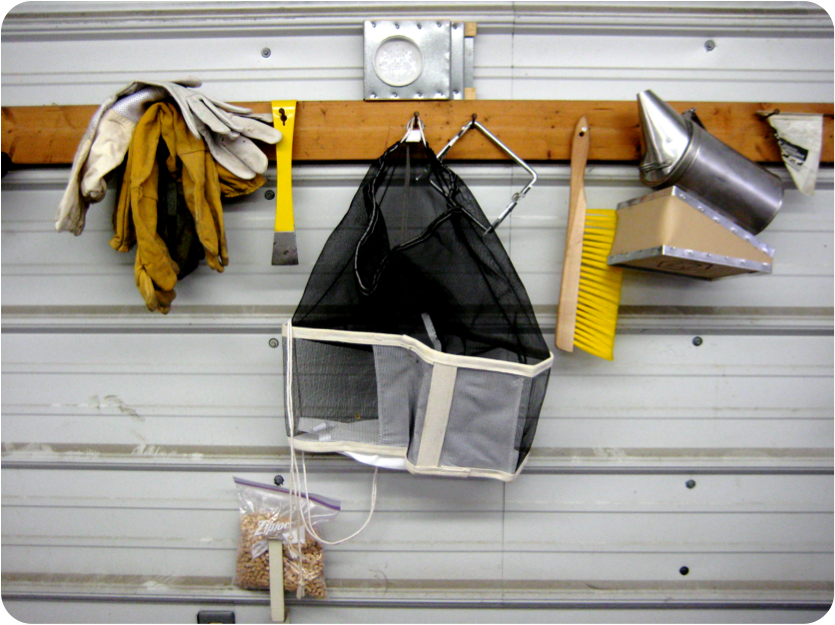
All this spring blooming and warm weather forced us to finally get the beehives completely ready for the arrival of our two little colonies! I am so anxious for them to get here! We (Jesse) finished constructing the supers and frames and then I painted all the outsides of the boxes, to weatherproof them. We ended up selecting a very light, sun-reflecting shade of yellow that is not unlike the color of honey (*thanks, Kathy, for the suggestion!*) I am rereading a lot of my bee books lately and it has me falling in love all over again, remembering this early passion of mine and why I even started farming in the first place. The beautiful relationship between the farmer and the earth, and what happens when we are good husbands to nature. We can't wait to watch these bees, to learn from them and hopefully help them along enough for us (and our shareholders!) to enjoy a bit of their sweet honey by the year's end.- Hannah.





MAKING SOIL BLOCKS.
We took full advantage of the SUMMER-like weather this week and started our first seeds! As we learned from Eric, our papa farmer, Jesse and I made our own soil mixture (soil, peat moss, compost, lime, and sand) and then used a square press to make "soil blocks." We poked the tiny seeds into these blocks and now, we wait for the magic of germination! I love this method of starting seeds, as it eliminates the need for little plastic pots and containers. Plus, the plants PREFER to grow this way. When the roots of these tiny seedlings spread throughout the soil, they will stop as soon as they hit air. But if these seeds were in a little pot, they grow out to the edges and then start circling around the edge, wrapping and wrapping, trying to find air. This is a huge waste of energy for these guys! When our soil blocks are big enough, they can simply be plopped into the ground, or even transplanted into a bigger block before they are ready for their big show. Maybe that's a lot of useless info, but to us, it really is the most incredible sight to see. And it is always fun to play around in the mud. Now let's just hope our little "greenhouse" treats them right!- Hannah.


